
by DAVE MIKEL
Each and every year I hear the same thing from those that have worked hard throughout the off-season; lifting weights, conditioning, speed and agility work, stretching, etc… as soon as their sports season begins they stop working out and say, “I’ll see you after the season’s over”. Why? Look at it this way, you’ve worked hard all season long in preparation for your sport with expectations of having a great season, and then you stop doing what made it all possible.

The question that every athlete should be asking and seeking expert advice on is, “What should I be doing during the season to maintain all the great gains I made off-season?” The answer has to do with specificity and reduced training volume.
As a full-time strength and conditioning coach in the NFL, college and high school I made sure that our pre-season phase (4-5 weeks) was the most sport and position specific as possible. In addition, I reduced the amount of lower body weight training as a means of tapering. The program was designed this way to enhance performance, and to prevent injury during training camps. In-season training maintains this same philosophy.
These same training principals apply, whether you are a professional athlete, a young amateur athlete, or consistently competing in recreational events. My 15+ years of strength coaching experience at all levels has taught me that in order to efficiently maintain the strength and power you developed in the off-season, the majority of your weight training workouts should be explosive in nature and trained with reduced volume. To better understand this, let’s first look at what explosive weight training means.
Power Training
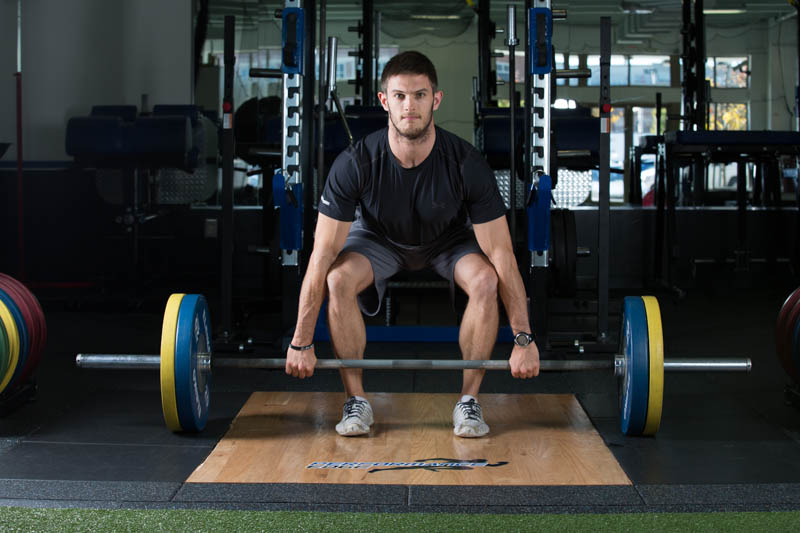
Power and explosiveness is of high priority in most sports. There are a number of training methodologies that teach power production, but remember whatever exercise you are performing to enhance lower body power, you must consciously intend to explode, be it with light or heavy weight. The intent to move quickly elicits the fast twitch muscle fibers, and the intensity of that intent creates the contraction strength. In other words, if you want to move quickly, and with power, you must try as hard as you are able.
Since the majority of your lifts/training during the in-season should be explosive in nature, you must limit or omit (especially with respect to your lower body) training that is “bodybuilding” in nature. This is where the reduction of training volume is critical.
Reduced Volume
Volume refers to the total number of sets and reps performed for each exercise. Bodybuilding (muscle-building) protocols dictate that a moderate number of repetitions/set be performed (8-12). Multiple sets within this repetition range are also performed at a very high intensity of effort. The problems associated with using bodybuilding methods during the season are: 1) it is very fatiguing, and 2) not specific to the types of muscular contractions required in your sport. Instead, perform a lower volume of reps/set (2-6), and total sets (2-4) for each lower body exercise; two exercises at most per session. Perform these exercises with a moderate amount of weight and intend to explode on every rep of every set to enhance power, even if the weight feels heavy. Explosively performing a lower volume of training will not only keep you strong but maintain the lean body mass that you have achieved during the off-season.
When I tested the NFL, collegiate, and high school players during the season, I found that we were very effective in maintaining strength and lean body mass when our players trained in the manner described above. While working with Mark Nemish, the strength and conditioning coach for the Washington Capitals, electronic devises we used that measured power, also showed that we maintained lower body explosiveness very effectively throughout the season. Training with a reduced volume, but with explosive contractions, will also serve to conserve your energy for more important aspects of your in-season: skill training, injury pre-habilitation, and performance.
Skill Training:
Having had the opportunity to have played and work at various levels of prep, collegiate and professional sports, I have had the privilege to learn from several wise and extremely knowledgeable coaches. As a strength coach, I have several functions I am tasked with, but the one thing Sam Rutigliano (former Head Coach of the Cleveland Browns and Offensive Coordinator for the Barcelona Dragons and Scottish Claymore of the NFL Europe League) impressed upon me was the notion that during the season, the players must be ready to play the game. Thus, by following the training guidelines outlined above, you will give yourself a much better chance to be recovered for your games and practices than if you employ muscle building methods. It is during games and practices that your skills must be showcased and honed. Remember, you can’t play the game in the weight room!
Finally, it is a great time during the season to work on injury prevention strategies specific to your sport and your own history of injuries. Many of our players receive specialized exercises addressing their specific weaknesses during the year. Rotator cuff strengthening for weak shoulders or specialized abdominal workouts for those with low back problems are examples of these specialized injury pre-habilitation protocols.
In summary, in-season training for your sport is crucial in terms of maintenance and injury prevention. Remember, reduce the volume of your strength training work and perform the majority of your lower body exercises in an explosive fashion. This will aid in maintaining strength, lean body mass, and explosiveness while sparing your energy for more important methods of preparation and competition.
Have a great season, and remember quality over quantity! Stay Strong!