Speed and Agility Training vs Conditioning

By Chuck Burt
Assistant Sports Performance Director

There is a common misconception as to what speed and agility training really is and what exactly that type of training entails. Many individuals; kids, parents, athletes and often times position coaches, think that if they’re heart is beating hard, their out of breath and they’re hot and sweaty they must be getting faster. This thinking is flawed…..quantity doesn’t necessarily mean quality! These individuals may be running around and active, which often times is better than nothing; however it is not teaching them better, more efficient running mechanics. That type of training is more clearly defined as conditioning, or more precisely cardio respiratory conditioning, and in no way should be confused with speed training.

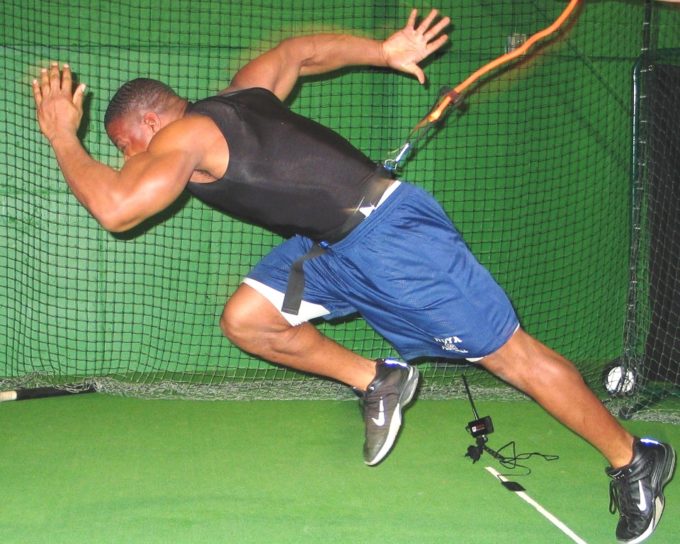
Cardio respiratory conditioning is defined as any form of aerobic exercise that elevates your heart rate and causes your breathing to become somewhat labored for an extended period of time. Cardio training is usually done at a lower intensity level (submaximal speed) and with a higher level of volume (multiple sets). Speed and agility training on the other hand must be done at a higher intensity level (maximal speed) and at a lower work volume, so that the volume of the movements does not interfere with the athlete/individual’s ability to put forth a quality effort due to fatigue. A longer or ample rest period is required for speed and agility training which allows the body to resynthesize glycogen. Glycogen is the fuel that your body uses to drive itself to perform work. If glycogen stores are depleted and not allowed to recover, then the intensity of the work will drop no matter how hard the athlete tries.

Any qualified track coach knows that at the beginning of the season the initial training process should first consist of more conditioning protocols, and progress towards more speed work as the season nears the more important meets and qualifiers. The season starts with higher volume, shorter rest breaks, and as the season progresses the work load and volume drops while the recovery time increases. This allows the ATP-Phosphocreatine and fast twitch glycolytic energy systems (utilized in sprinting) to fully recover.

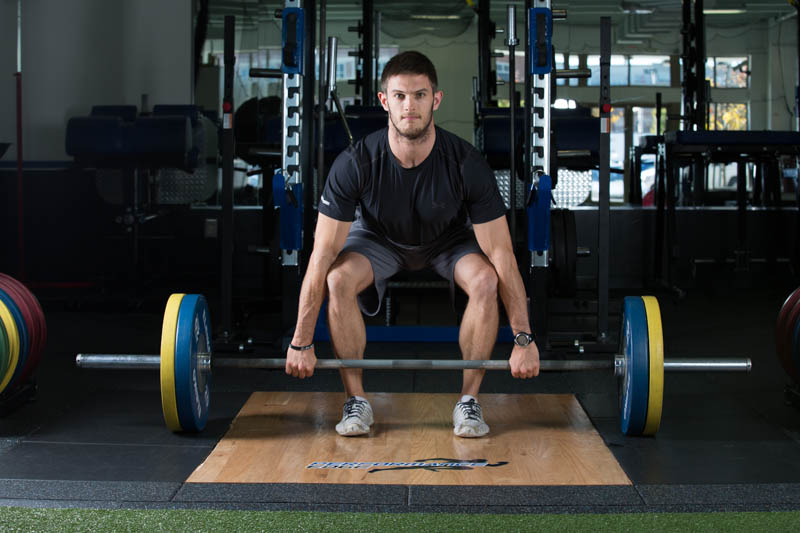
Speed is a skill, and like any skill, it can be taught – but it must be done with proper progression. The skill must first be taught slowly and in a controlled manner. Before attempting to perform any sort of speed and agility (or explosive) training, you first need to teach the athlete to control their own body. By not doing so runs the risk of the athlete possibly getting injured. The old adage “crawl before you walk; walk before you run” holds true to speed and agility training. First you must learn to control your bodyweight, then learn the skill slowly and finally focus on speed and power. This also holds true about strength development; an athlete cannot be expected to do a squat jump if they cannot squat with good technique. The more control an athlete has over their body, the more efficient they will be in applying force into the ground (Sprinting and Jumping).

A quality program must entail a few things. First, it must incorporate a proper warm up that includes injury prevention. Second, the skill that will be focused on must be broken down into parts that can be understood by the athletes. Next, those parts must then be put back together and coached as a whole. Finally there must be some sort of application that teaches the athlete how this applies to the field or court. This can be a game or a drill, but it must teach them how to use the skill on the field or court.

The skill being taught must be done with a small enough class size that allows the Coach to interact with each individual. Often times many of the Speed & Agility clinics that are offered have 30+ athletes (some of them have hundreds of athletes) and the majority of the time training is focused on conditioning. In that style of clinic, where there’s a large group of athletes, the only ones that get coached are the best athletes. While part of our job is to make good athletes great; I believe the biggest part is to make the below average athlete great. A smaller coach to athlete ratio (10:1) is more beneficial. This will lead to athletes having more success on the field and will help build their confidence; ultimately leading to success off the field (and in all other aspects of their life).

Summers are without a doubt filled with offerings for Speed & Agility clinics. I urge parents and coaches to research Speed & Agility clinics before signing their young athlete up. Ask yourself these questions:

  • What are this person’s qualifications?
  • Do they have a degree which shows they understand the biomechanics and physiology/kinesiology of my son/daughter and do they know how to apply that knowledge?
  • Is there any injury prevention in this program? If so what specifically are they going to do to help prevent my son/daughter from tearing their ACL or helping to prevent my son/daughter from getting a concussion while they play?

IF you get the answers you are looking for from these questions, you found a quality clinic; if not, you should continue your search…….

Sport-Specific In-Season Training: Why It’s Needed

by DAVE MIKEL

Each and every year I hear the same thing from those that have worked hard throughout the off-season; lifting weights, conditioning, speed and agility work, stretching, etc… as soon as their sports season begins they stop working out and say, “I’ll see you after the season’s over”. Why? Look at it this way, you’ve worked hard all season long in preparation for your sport with expectations of having a great season, and then you stop doing what made it all possible.

Pic 7 - S. Hall

The question that every athlete should be asking and seeking expert advice on is, “What should I be doing during the season to maintain all the great gains I made off-season?” The answer has to do with specificity and reduced training volume.

As a full-time strength and conditioning coach in the NFL, college and high school I made sure that our pre-season phase (4-5 weeks) was the most sport and position specific as possible. In addition, I reduced the amount of lower body weight training as a means of tapering. The program was designed this way to enhance performance, and to prevent injury during training camps. In-season training maintains this same philosophy.

These same training principals apply, whether you are a professional athlete, a young amateur athlete, or consistently competing in recreational events. My 15+ years of strength coaching experience at all levels has taught me that in order to efficiently maintain the strength and power you developed in the off-season, the majority of your weight training workouts should be explosive in nature and trained with reduced volume. To better understand this, let’s first look at what explosive weight training means.

Power Training
Power and explosiveness is of high priority in most sports. There are a number of training methodologies that teach power production, but remember whatever exercise you are performing to enhance lower body power, you must consciously intend to explode, be it with light or heavy weight. The intent to move quickly elicits the fast twitch muscle fibers, and the intensity of that intent creates the contraction strength. In other words, if you want to move quickly, and with power, you must try as hard as you are able.

Since the majority of your lifts/training during the in-season should be explosive in nature, you must limit or omit (especially with respect to your lower body) training that is “bodybuilding” in nature. This is where the reduction of training volume is critical.

Reduced Volume
Volume refers to the total number of sets and reps performed for each exercise. Bodybuilding (muscle-building) protocols dictate that a moderate number of repetitions/set be performed (8-12). Multiple sets within this repetition range are also performed at a very high intensity of effort. The problems associated with using bodybuilding methods during the season are: 1) it is very fatiguing, and 2) not specific to the types of muscular contractions required in your sport. Instead, perform a lower volume of reps/set (2-6), and total sets (2-4) for each lower body exercise; two exercises at most per session. Perform these exercises with a moderate amount of weight and intend to explode on every rep of every set to enhance power, even if the weight feels heavy. Explosively performing a lower volume of training will not only keep you strong but maintain the lean body mass that you have achieved during the off-season.

When I tested the NFL, collegiate, and high school players during the season, I found that we were very effective in maintaining strength and lean body mass when our players trained in the manner described above. While working with Mark Nemish, the strength and conditioning coach for the Washington Capitals, electronic devises we used that measured power, also showed that we maintained lower body explosiveness very effectively throughout the season. Training with a reduced volume, but with explosive contractions, will also serve to conserve your energy for more important aspects of your in-season: skill training, injury pre-habilitation, and performance.

Skill Training:
Having had the opportunity to have played and work at various levels of prep, collegiate and professional sports, I have had the privilege to learn from several wise and extremely knowledgeable coaches. As a strength coach, I have several functions I am tasked with, but the one thing Sam Rutigliano (former Head Coach of the Cleveland Browns and Offensive Coordinator for the Barcelona Dragons and Scottish Claymore of the NFL Europe League) impressed upon me was the notion that during the season, the players must be ready to play the game. Thus, by following the training guidelines outlined above, you will give yourself a much better chance to be recovered for your games and practices than if you employ muscle building methods. It is during games and practices that your skills must be showcased and honed. Remember, you can’t play the game in the weight room!

Finally, it is a great time during the season to work on injury prevention strategies specific to your sport and your own history of injuries. Many of our players receive specialized exercises addressing their specific weaknesses during the year. Rotator cuff strengthening for weak shoulders or specialized abdominal workouts for those with low back problems are examples of these specialized injury pre-habilitation protocols.

In summary, in-season training for your sport is crucial in terms of maintenance and injury prevention. Remember, reduce the volume of your strength training work and perform the majority of your lower body exercises in an explosive fashion. This will aid in maintaining strength, lean body mass, and explosiveness while sparing your energy for more important methods of preparation and competition.

Have a great season, and remember quality over quantity! Stay Strong!

8 Reasons Women Should Lift Heavier Weights

Many women believe that lifting weights will result in them looking like men, bulking up, or stop burning calories. All of this is untrue! The women you see who look like men, with the grossly large muscles, in general are taking testosterone supplements and possibly steroids in order to look that way. They also spend an inordinate amount of time (3 to 5 hours a day, 5-7 days a week) in order to obtain that large size and muscle development. Don’t take those things and make lifting your everyday job and you won’t look that way! In fact you will look slim, sleek and fit. Instead of being skinny fat – you know where you look ok in clothes because you’re thin, but not so good in a swimsuit because you have no lean muscle – you will be healthy and look amazing in practically everything.

Okay so you want reasons to lift heavy weights instead of tiny dinky ones?

1. It builds muscle faster.
I’m sure you’re sitting there thinking “Well duh, weight lifting = building muscles, who knew?!” But I just wanted to reiterate that while lifting light weights can increase your endurance, it’s nothing more than weighted cardio. To build real muscle you need to lift heavy weights. You want to lift the heaviest weight you can lift for 8-12 reps, if you can’t lift 8 reps it’s too heavy if you lift more than 12 reps it’s too light.

2. According to The Journal of Strength and Conditioning Research, when you build muscle you burn fat continuously! 2 sessions of heavy lifting a week will burn 3% body fat in 10 weeks without cutting calories. You’ll also burn 100 more calories than if you did only cardio, even though your heart rate monitor and calorie counter may tell you that the cardio you just did for an hour burned more than weight lifting, throughout at 24 hour period weight lifting will continue to burn calories and end up burning 100 more than the “cardio only” counterparts. (Put cardio and weight lifting together for a fantastic continuous burn!)

3. In a study from the University of Alabama in Birmingham they showed that dieters who lifted heavy weights lost the same amount of weight as dieters who did just cardio, but all the weight lost by the weight lifters was primarily fat while the cardio ladies lost muscle along with some fat. That equaled smaller clothing sizes for the weight lifters compared to the cardio goers.

4. Lifting weights prevents osteoporosis and can even help build stronger bones.

5. Women who lift heavy weights lose more belly fat than those who don’t. Weight lifting targets intra-abdominal fat and helps you lose the pooch and enjoy a flat belly faster than cardio and more lean muscle than cardio.

6. Lifting heavy weights makes you feel amazing. Lifting heavy weights successfully can aid in building your self-efficacy, and leave you feeling like you can take on the world! A feeling of
empowerment, knowing that you aren’t some weakling walking alongside the road and that people may misjudge you and you could prove them wrong.

7. Strengthening your muscles can help with your cardio. If you are still a cardio lover, adding some weight lifting can improve your knees and joints so that your runs are faster and less painful. Muscles absorb the stress or impact that would normally be relegated to your bones, tendons, and joints! Stronger muscles mean injury reduction and less wear and tear on your joints!

8. You’ll reduce your risk of heart diseases and diabetes, “Muscle helps remove glucose and triglycerides from the bloodstream, which reduces the risk of type II diabetes, as well as hardening of the arteries,” says Timothy Church, MD, PhD, a preventive medicine expert at Pennington Biomedical Research Center.

Cardio is still a great workout, but high impact workouts which can be hard on the knees and joints, and anyone who does both cardio and weight lifting will gain the most benefits.

Why Adults Need to Strength Train as They Age

Adults….if you’re not already doing so, you need to incorporate strength training into your fitness routine. Although all of us will have some degree of muscle loss over time, how much muscle is lost and how fast it happens depends a lot on how well we take care of our bodies. Staying active and exercising regularly can significantly slow muscle loss due to aging.

The process of losing muscle mass as we grow older is called aging sarcopenia. Sarcopenia is, in its most literal sense, the loss of muscle mass, strength and function related to aging. It begins around the age of 25, but it becomes much more noticeable after age 50. As we lose muscle mass, our bodies get weaker.

To decrease the effects of sarcopenia, you need to build muscle. To build muscle you need to engage in some form of resistance training that will place a load on the muscles hard enough to stress them into getting stronger.

Combining strength training with aerobic exercise, as well as, mobility/stability and stretching exercises can increase the benefit to your muscles even more. An added advantage is that this type of regular physical activity can promote heart, bone, metabolic and mental health, too.

Loss of muscle mass is a process that comes with aging, but you have the power to control it. Regularly making time to fit exercise into your schedule is well worth it. You will see long-term benefits not only in strength, but also in your flexibility and balance, and improvement in your overall fitness, health and — particularly important — your quality of life.

Ready to get stronger?….Don’t know where to start?……Stop in and talk with us, we’d love to help.